A Pep Talk for Cooking: Designing a More Fun & Motivating Cooking Experience
End-to-end
Visual Design
Mobile App
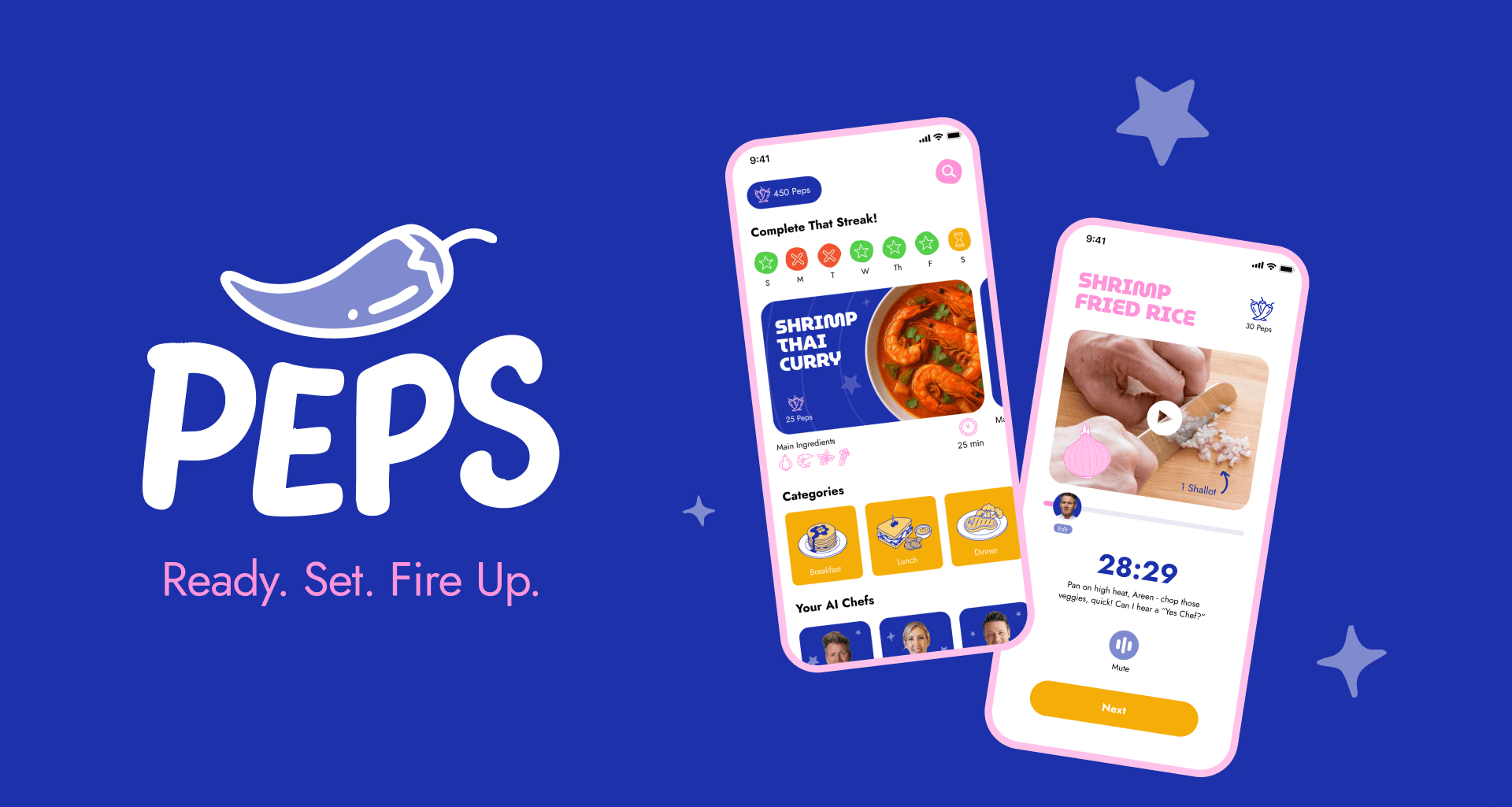
Peps is a cook-along app that uses AI guidance and rewards to help busy users turn everyday cooking into a motivating, time-friendly experience.
Role
UX Designer
Duration
3 months
Team
2 UX Designers
Tools
Figma
The assumption we began with
The problem lies in the question "What should I cook?"
We began with the assumption that cooking was difficult because recipes were hard to manage. If users had an easier way to save, organize, and return to meals they liked, cooking would naturally feel simpler.
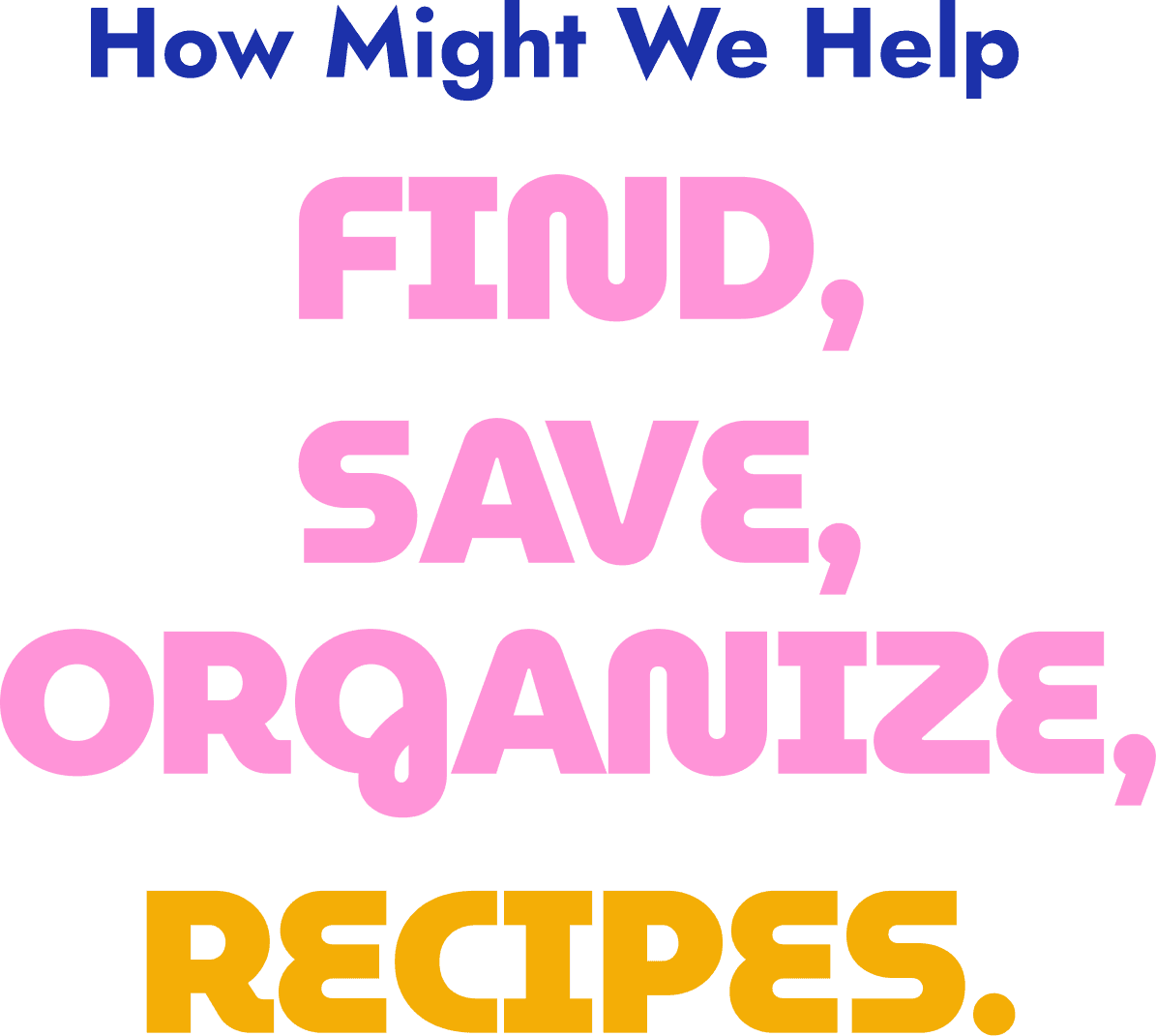
Shaping our initial HMW
How might we help find, save, and organise recipes over fragmented sources?
What research revealed instead
Rather than recipe discovery or storage, three underlying challenges consistently stood out.
Through interviews and surveys, a different picture emerged. People didn’t lack recipes. They lacked energy, time, and motivation, especially on weekdays.
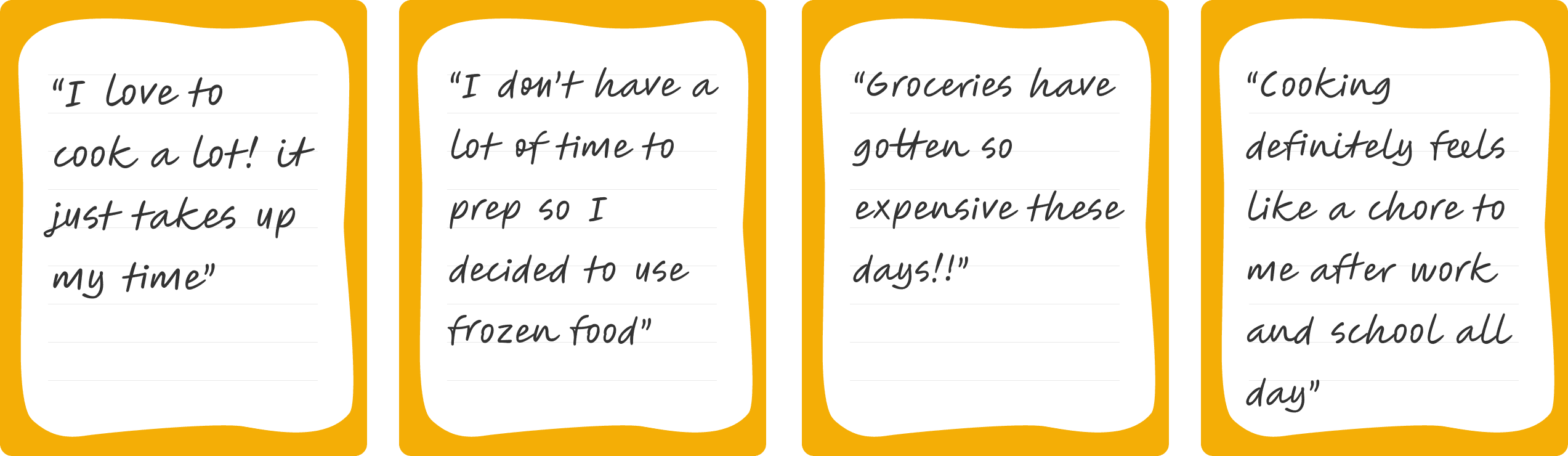
We interviewed 10 busy individuals, aged 22–35,
who are working, in school, or juggling both.
These findings were in line with our survey
Our survey results reinforce what we heard in interviews — people like cooking, but time constraints and the mental load make it feel like a chore. Cooking holds a dual role in people’s lives — it’s both a creative outlet and a practical necessity.
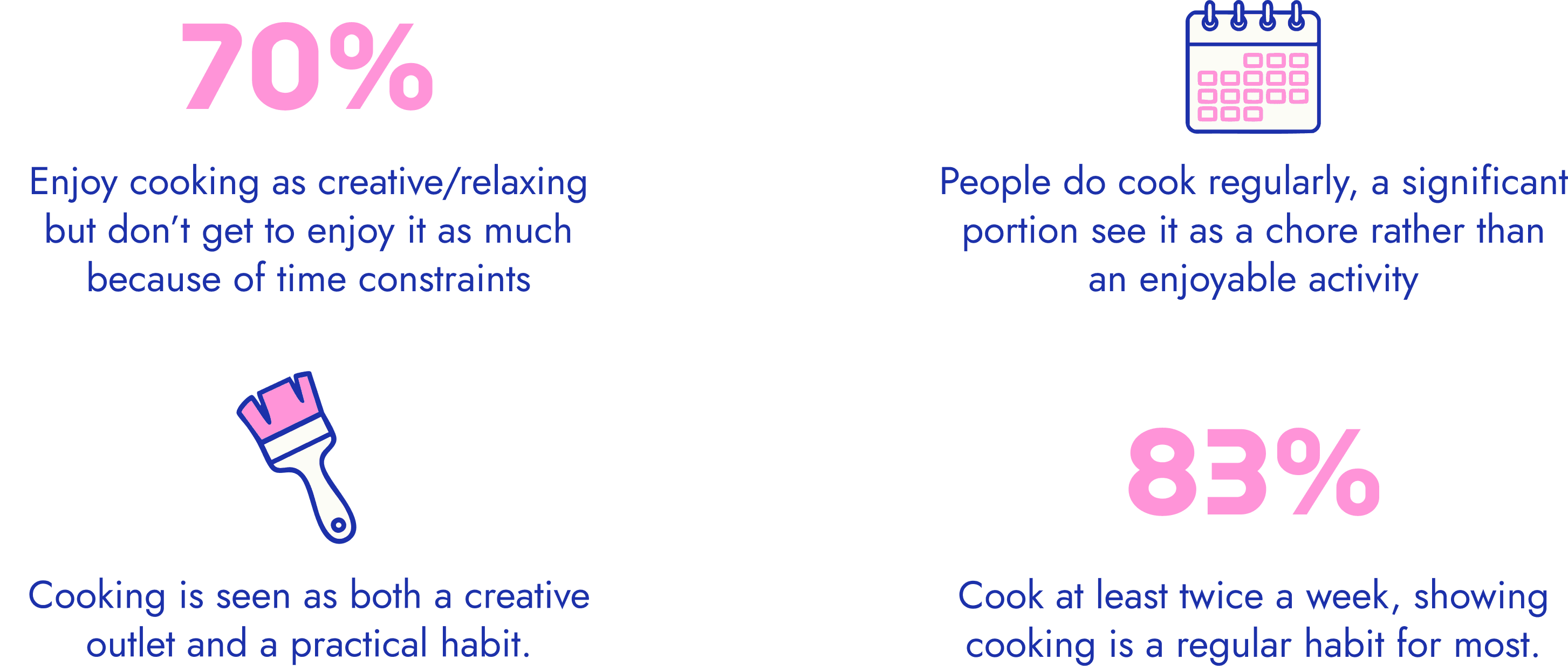
Based on the responses of 45 respondents in the age group 20-35
We concluded our research with 3 major insights
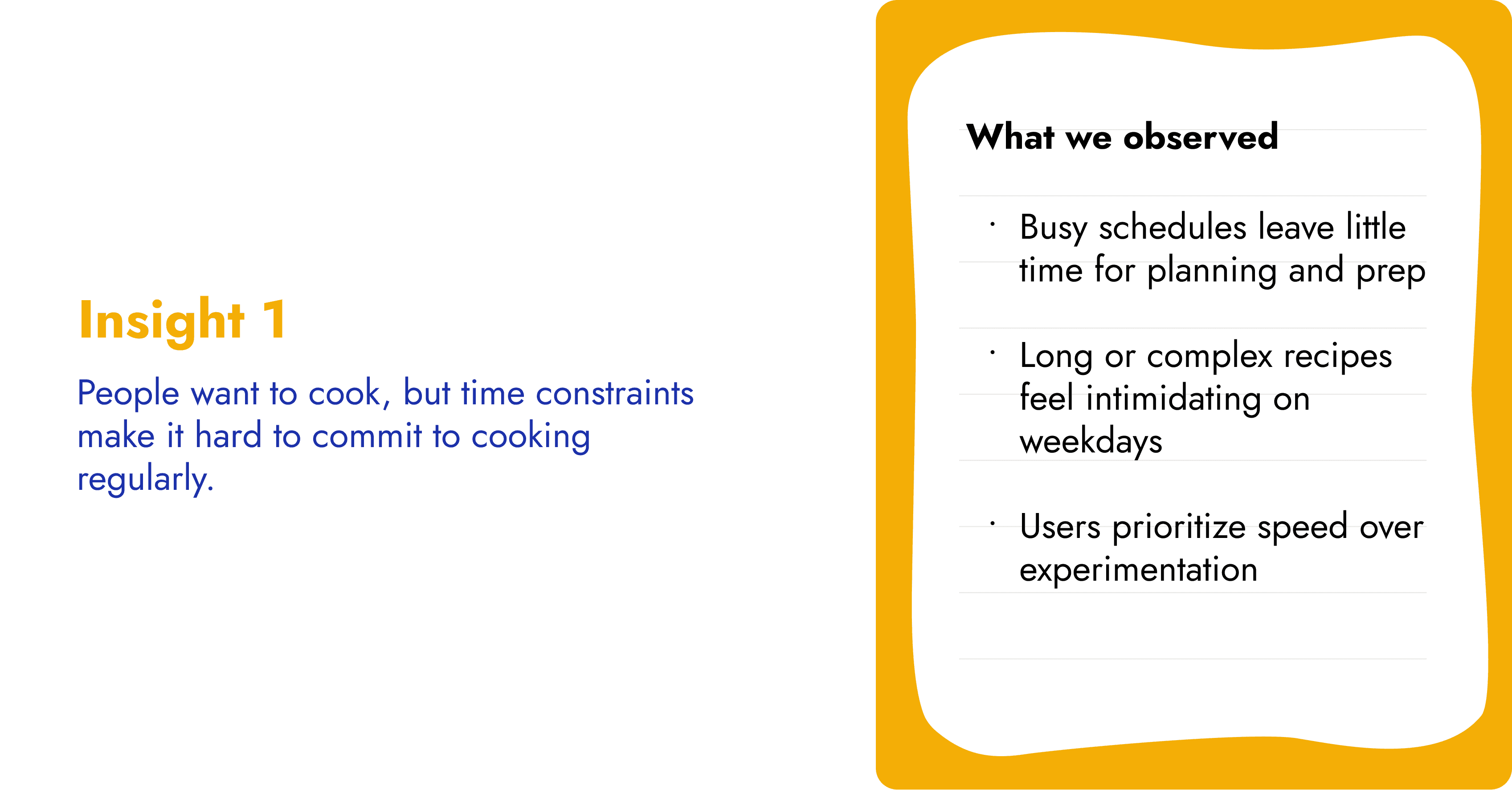
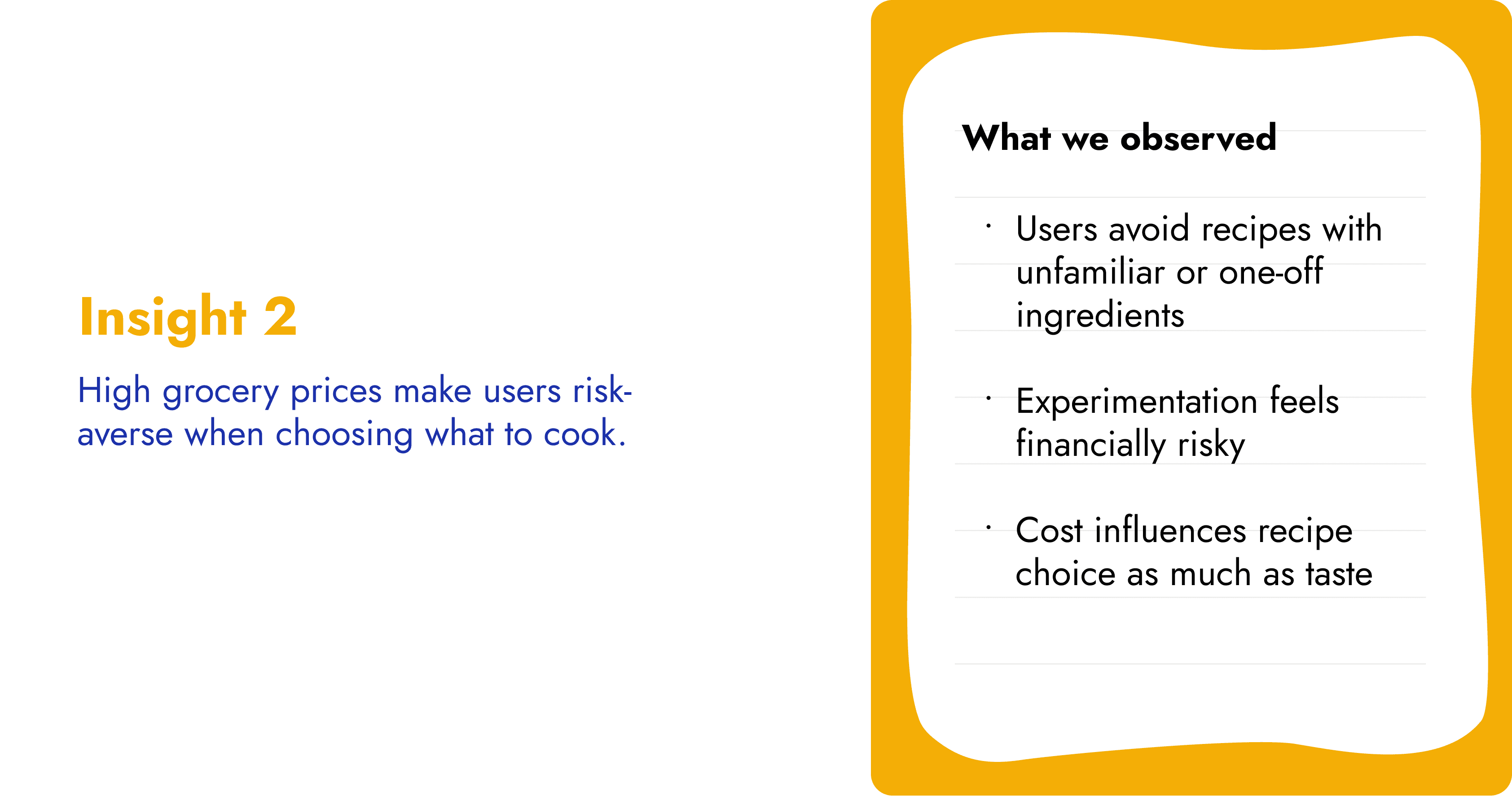
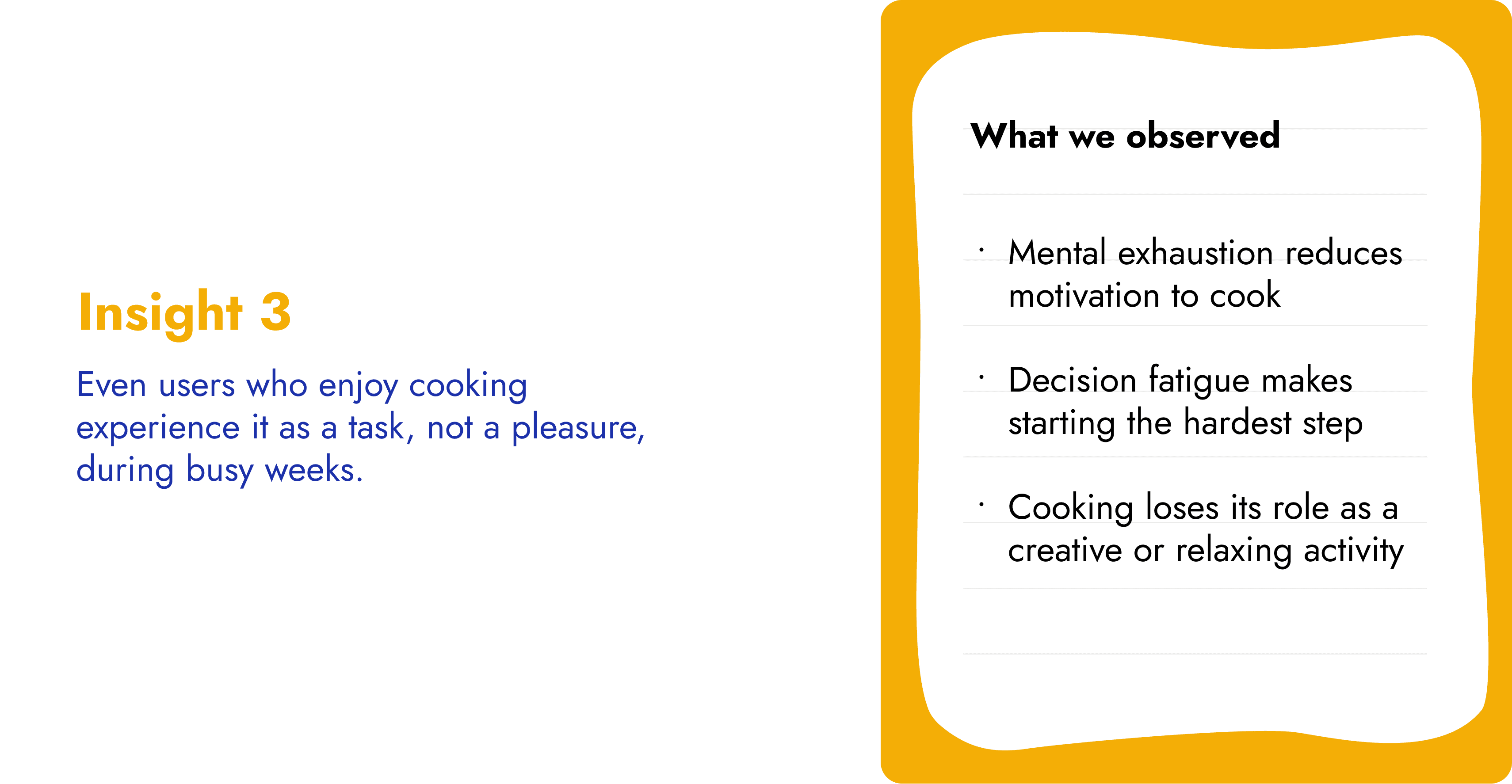
how our problem statement evolved
We pivoted to solving for the 3 major challenges identified
Holding on to our original question would have meant designing around an assumption that research didn’t validate. We shifted focus and grounded our work in the challenges users consistently identified.

we studied what competitors are doing
We picked some of the newer apps that support cooking in one way or the other
We reviewed leading cooking and meal-prep apps to understand how they support home cooks.
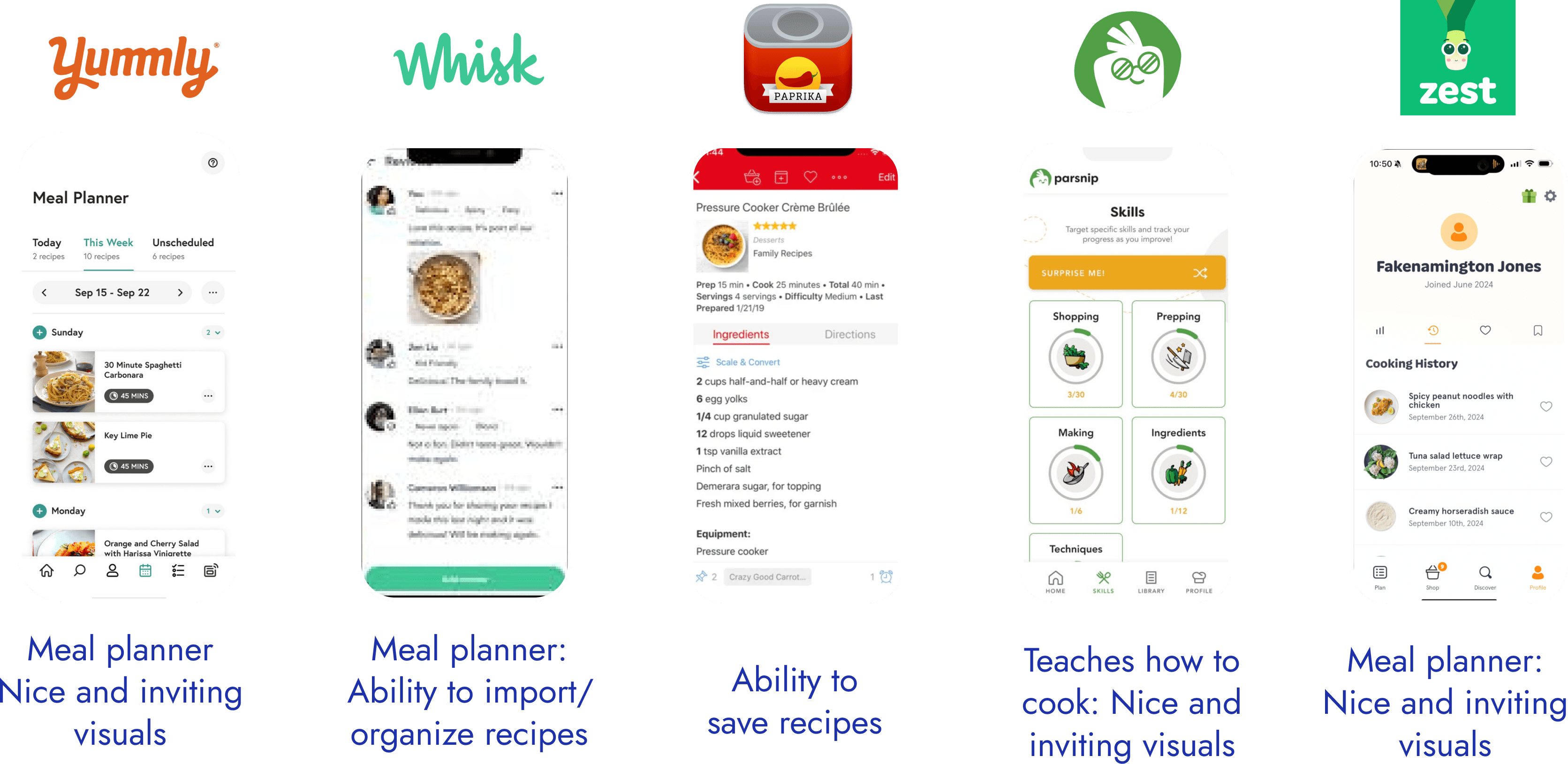
While they offer great recipe discovery and organization tools, none directly address cooking as a chore, time limitations, or grocery cost anxiety.
also looked into some indirect competitors
Our focus moved to exploring solution spaces around the validated problem areas.
Our exploration focused on how gamification and thoughtfully designed rewards could reshape cooking from a routine task into an experience that feels engaging, motivating, and worth the effort.
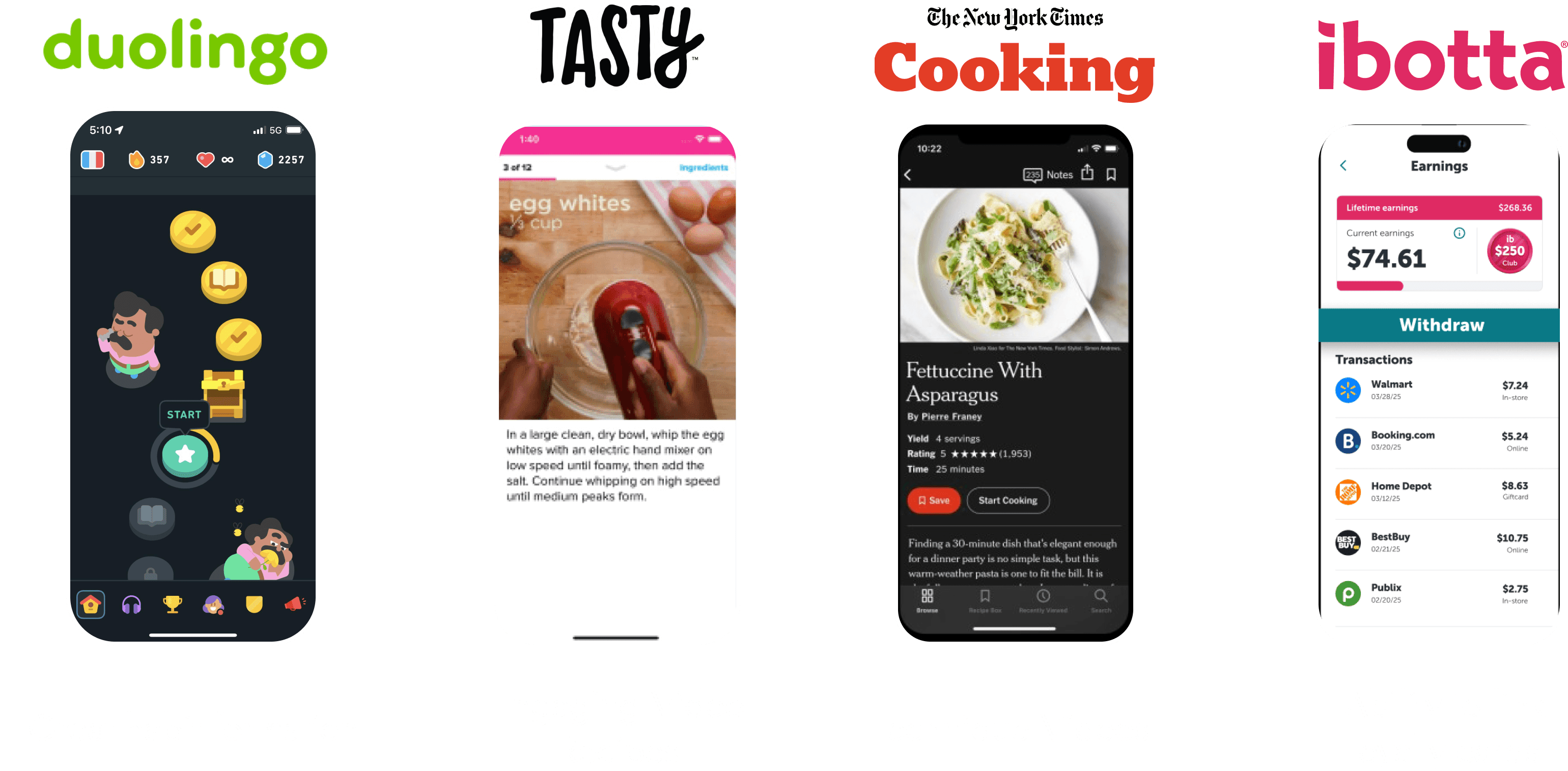
Where we saw an opportunity
However none of the interviewees mentioned using any of these apps
While each app has its strengths, none of our interviewees reported using them—except for one who had tried Zest. Among all competitors, Zest stood out as the most playful in both its UI and its educational, game-like format. This insight pointed us toward a clear direction: designing at the intersection of motivation, time, cost, and enjoyment.

then we designed our persona
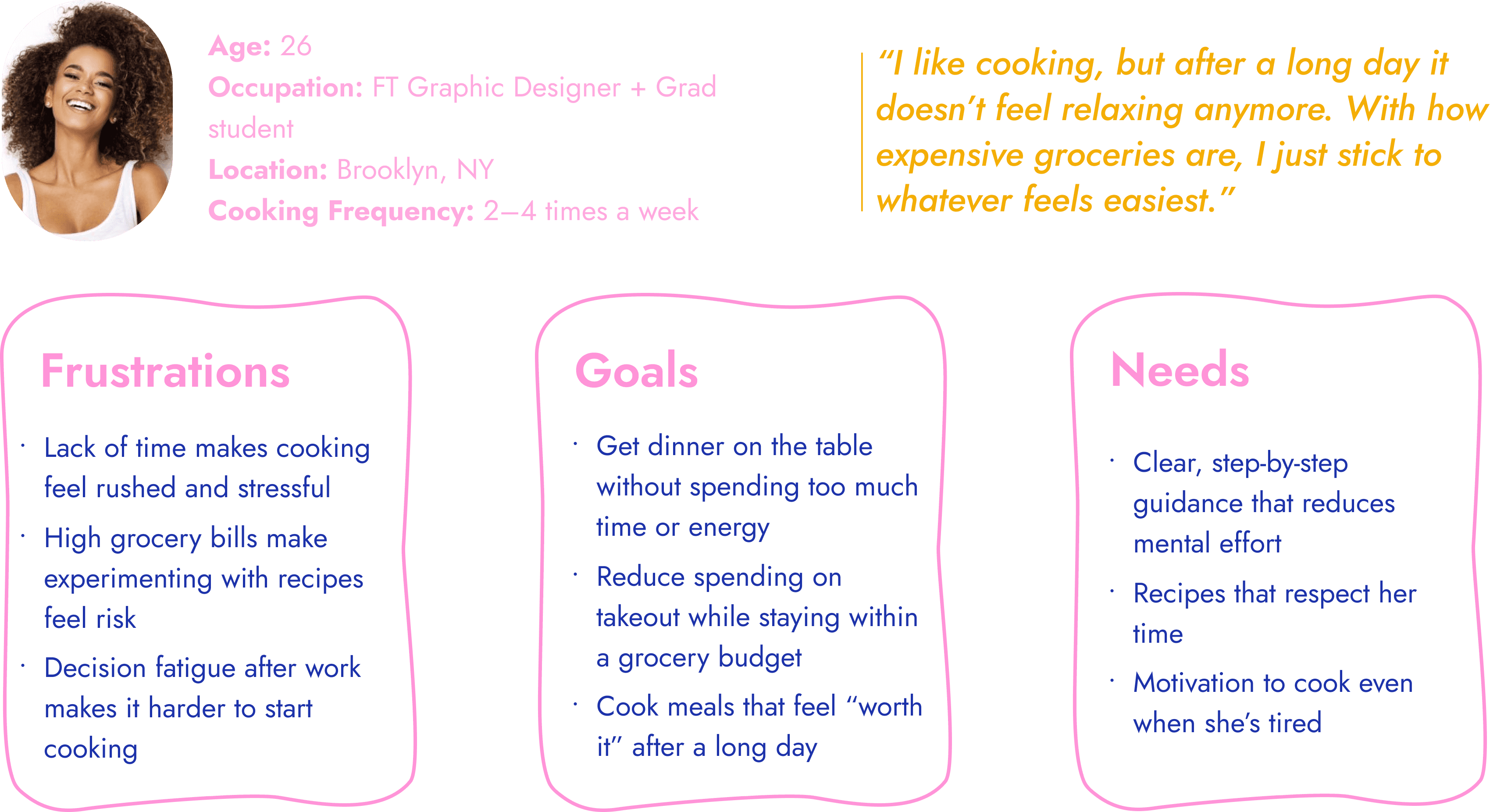
Our users don't dislike cooking — life has made it feel like work
This is Maya, our primary user. She cooks a few times a week and actually likes cooking, but because of busy workdays, it no longer feels relaxing — it feels like a chore.
Time pressure and decision fatigue make it hard to even get started, and rising grocery costs make her avoid trying new recipes, especially ones with one-off ingredients.
Maya helped us focus on a key insight: people don’t dislike cooking — life has made it feel like work.
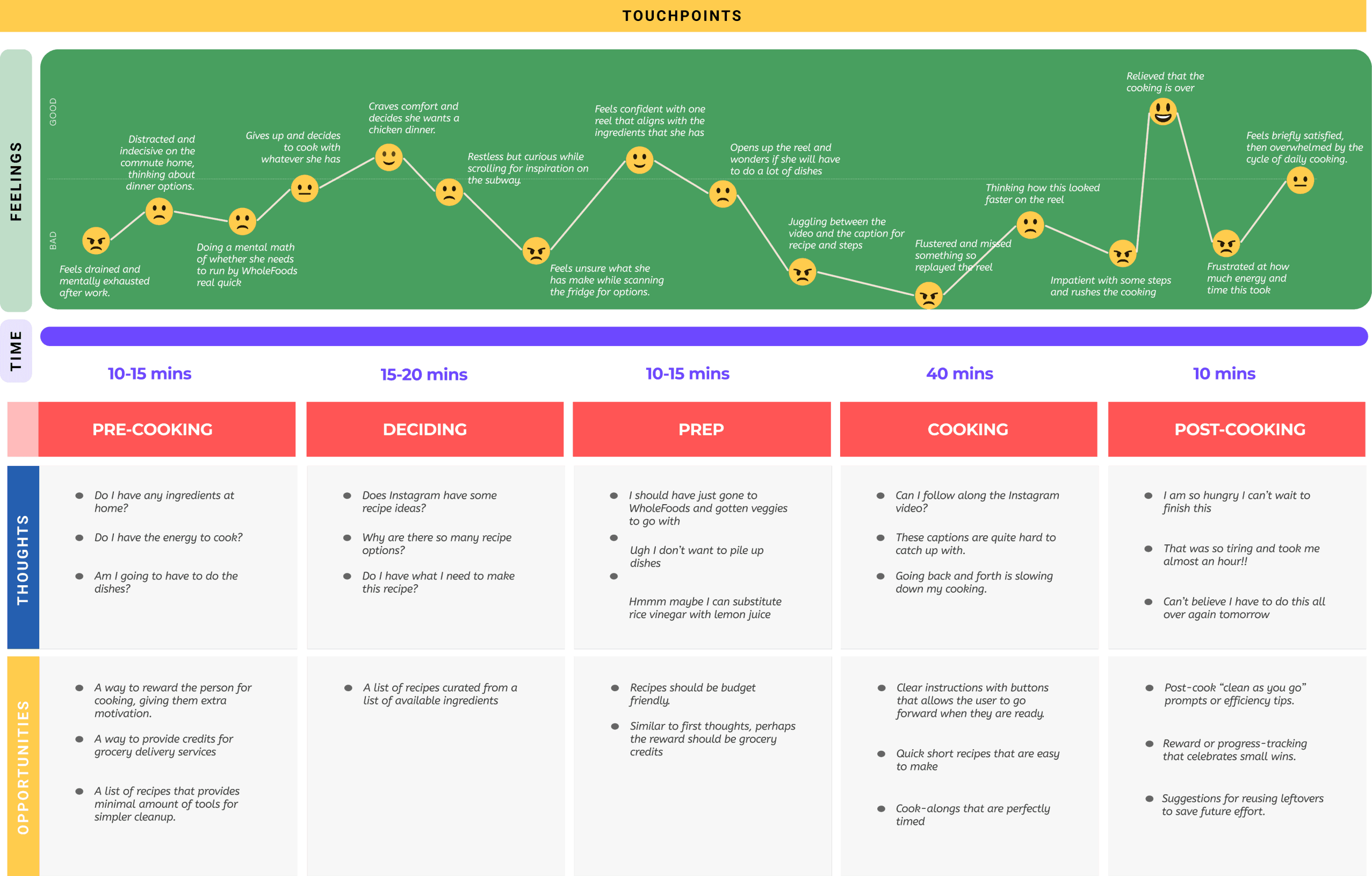
It takes about 1.5 hrs to cook one meal
From deciding what to cook to checking ingredients, prepping, and finishing a meal, the full process averages around an hour and a half.
Much of this time is spent before the stove is even turned on, adding to the mental load that makes cooking feel harder than it actually is.
ideation
We went wide with our ideas — exploring freely before narrowing in
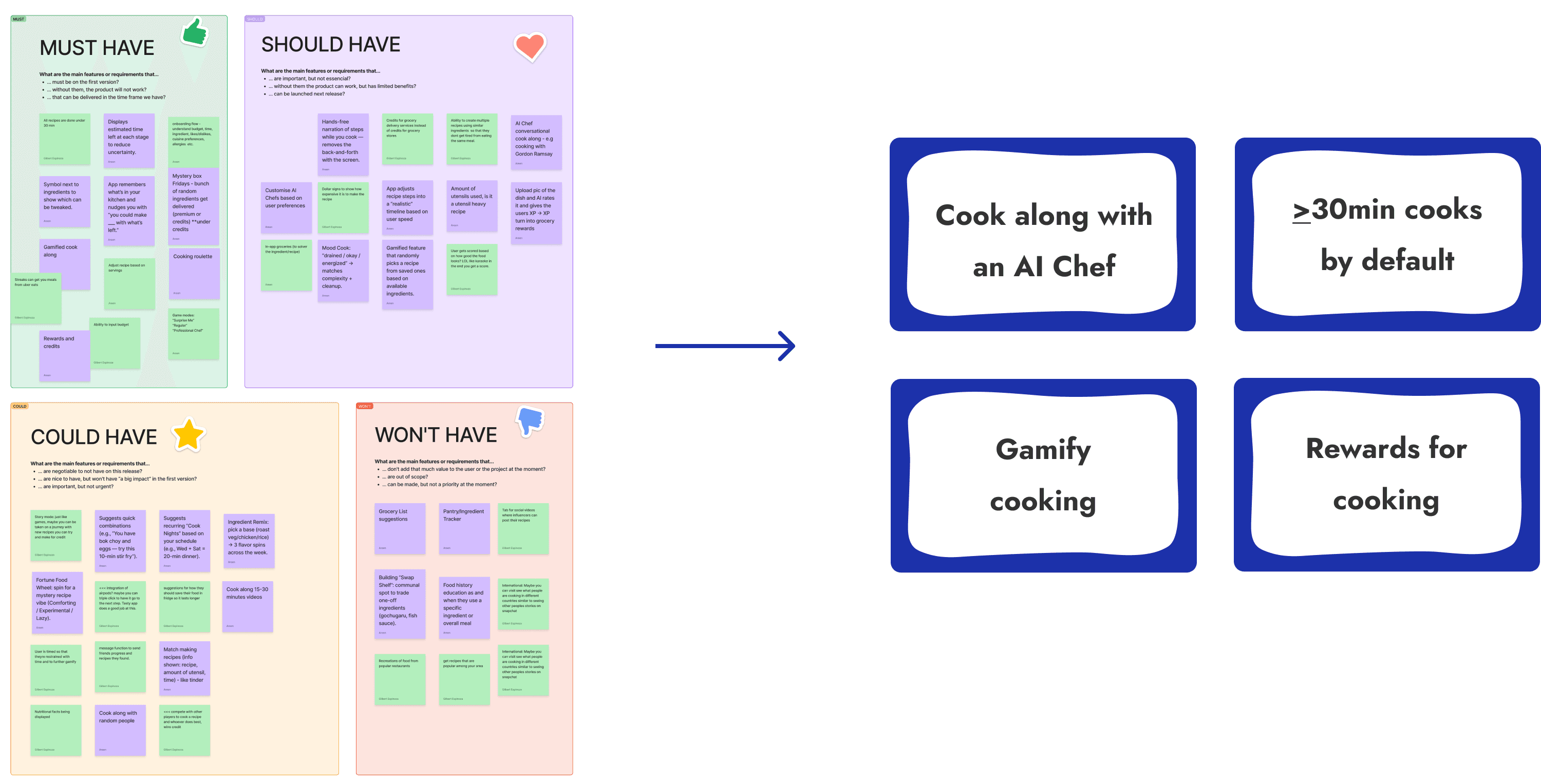
We used MoSCoW, SCAMPER, and mind mapping to explore a wide range of ideas and challenge existing assumptions around cooking.
As patterns began to emerge, we assessed each concept based on feasibility and how well it addressed the key challenges identified through research. This helped us narrow down to ideas that were both practical to execute and impactful for users.
Connecting Insights to Solutions
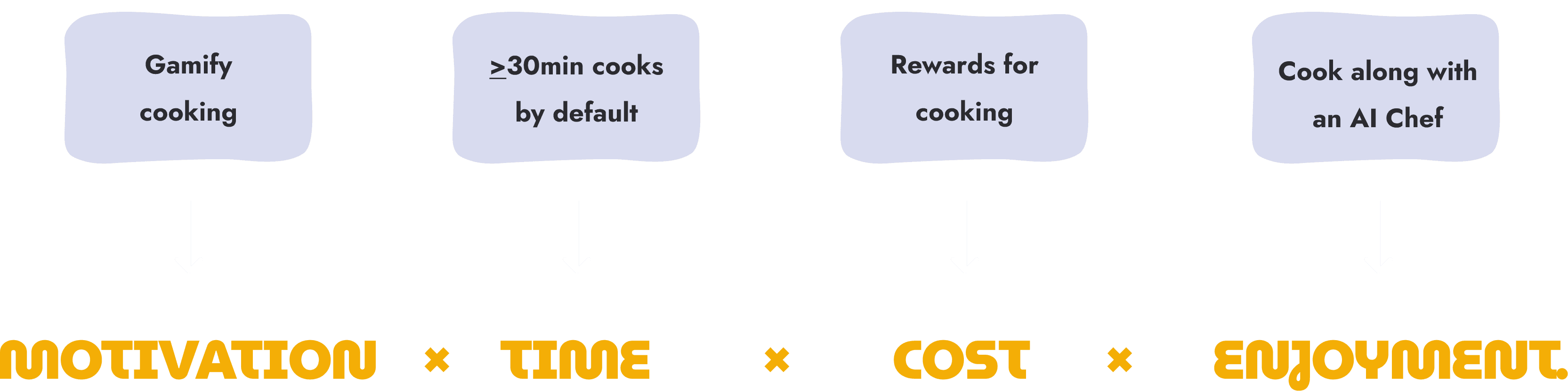
Each solution area was intentionally designed to map back to the core challenges identified through research.
The AI chef introduces a guided, cook-along experience that reduces overwhelm and keeps users engaged throughout the cooking process. By layering in gamification, the experience becomes more motivating, encouraging users to continue even on low-energy days.
To address time constraints, the app prioritizes recipes that can be completed in 30 minutes or less, helping users quickly commit to meals that fit into their schedules.
Finally, the rewards system allows users to earn points they can redeem for groceries or takeout, directly addressing rising food costs and reinforcing that the effort of cooking is worth it.
designing
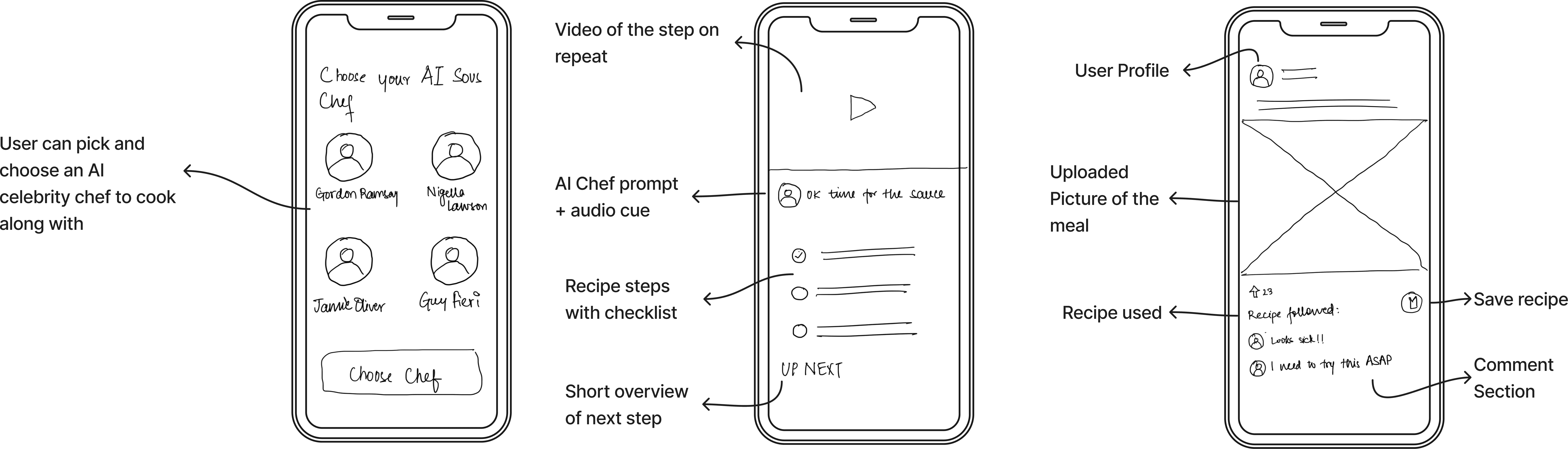
We started with lofi sketches to understand what this could look like
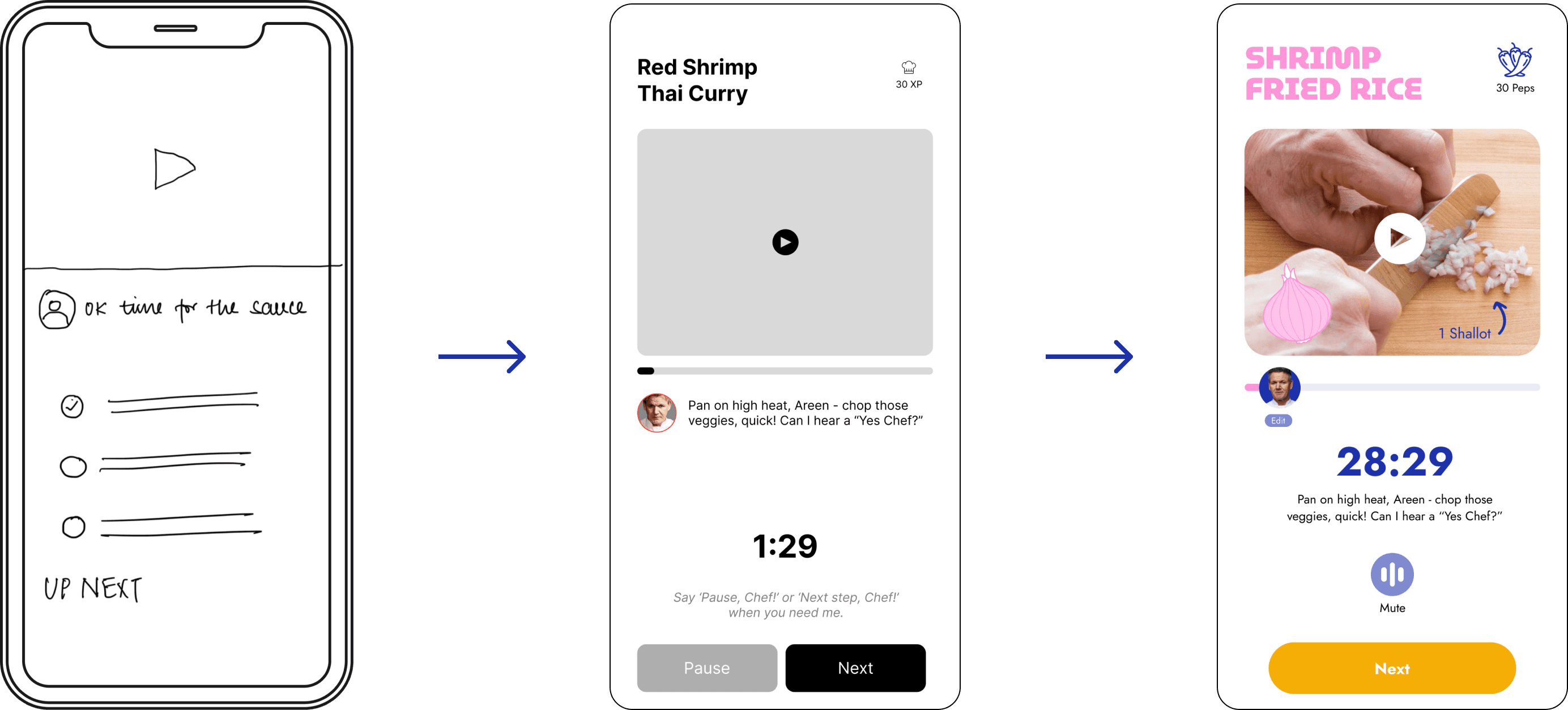
After some tweaks these eventually evolved to hifi.
style guide
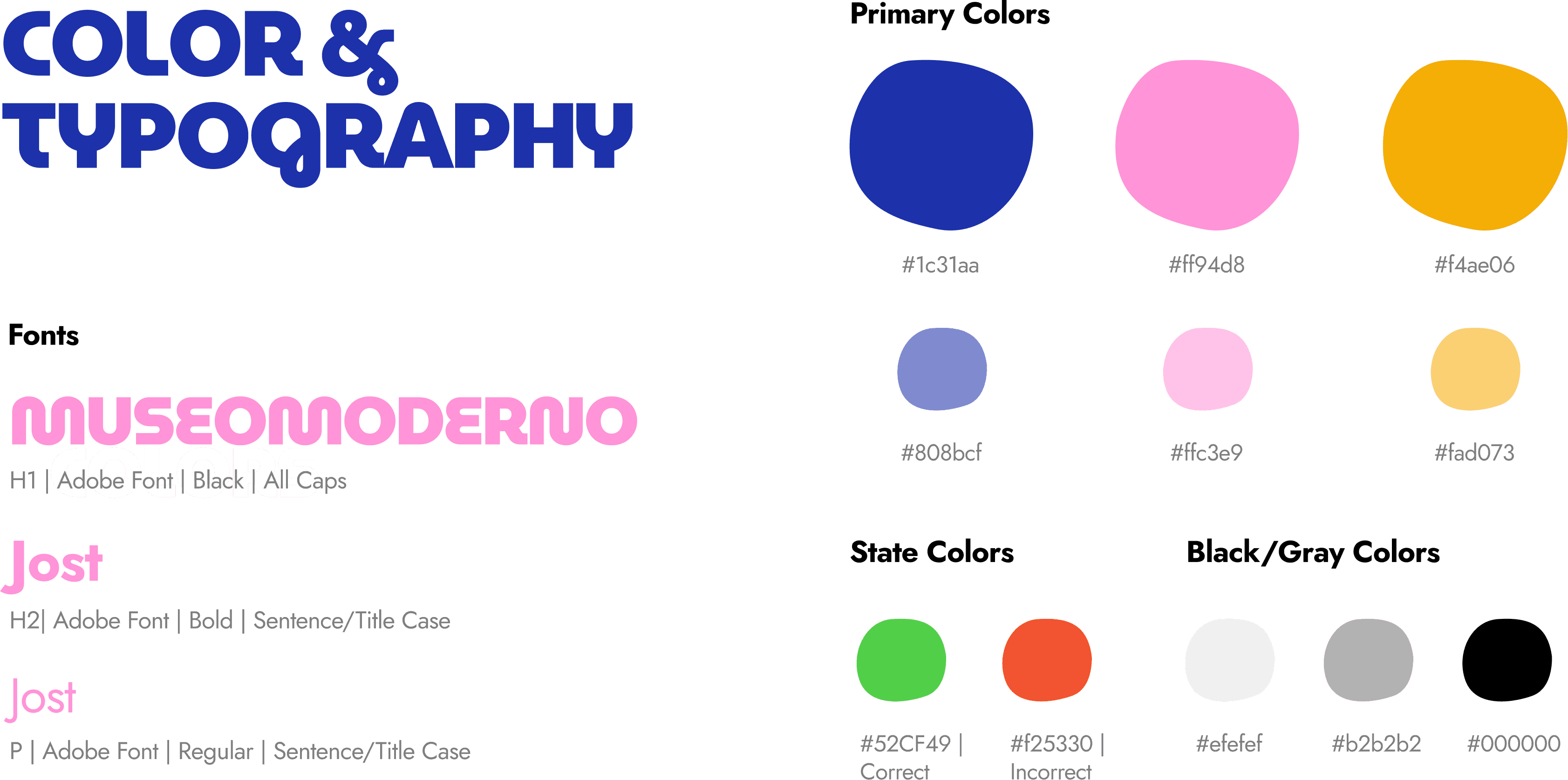
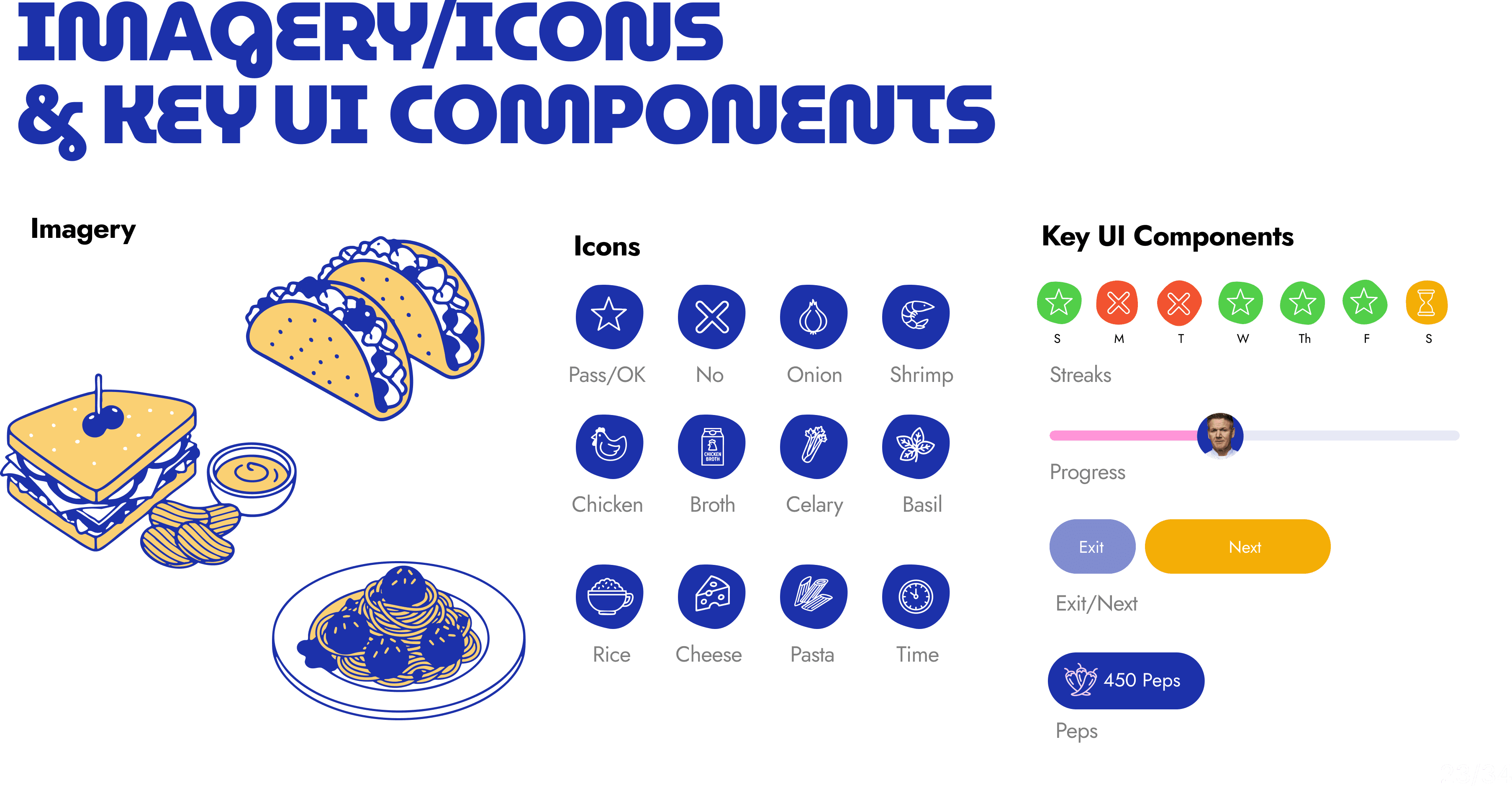
We intentionally aimed for a visual language that felt fun, playful, and a little whimsical.
core flow
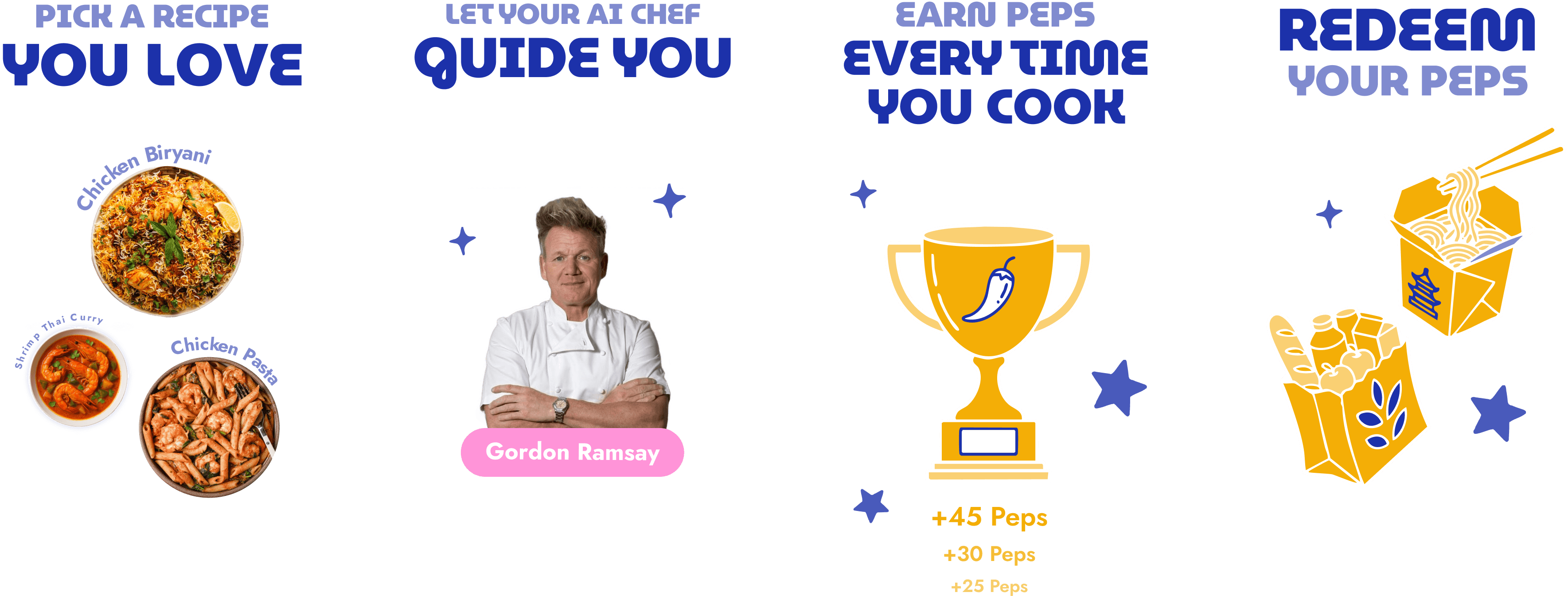
We designed the app by first identifying the core flow
Users begin with onboarding to set their preferences, choose an AI chef, select a recipe, and cook along step by step — earning rewards for every successful cook.
Screens
Home
View suggested recipes
Choose an aI chef
See what others cooked
Explore
Explore different Cuisines
search through Meal type
Filter search
Cook along
Step-by-step Cooking
Follow instructions by aI Chef
video of each step
REWARDS
Rewards dashboard
Rewards history
Redeem for groceries and takeout
wE TESTED OUR SCREENS
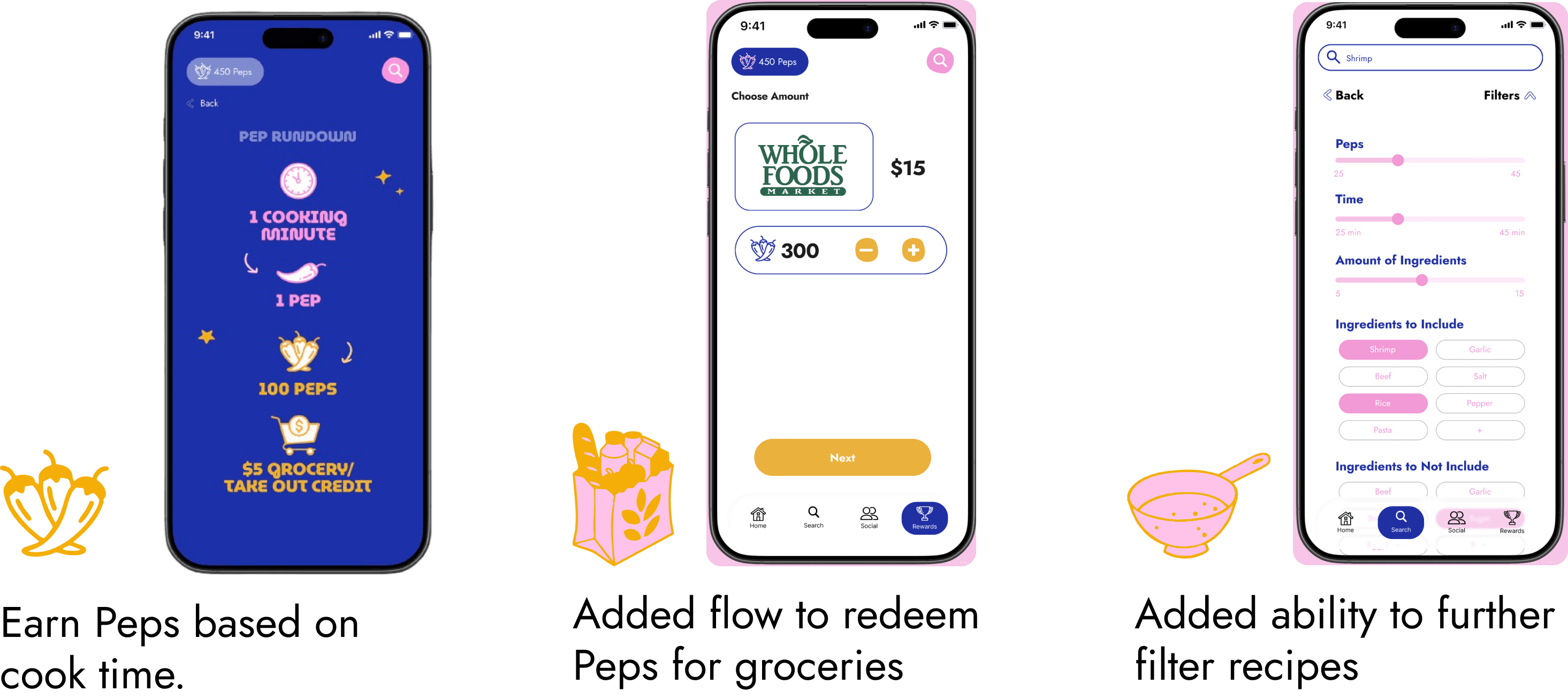
While testers enjoyed the playful UI — they still had some confusion with the flow and logic
Due to limitations in fully executing the cook-along mode, we conducted expectation-based usability testing with three users to evaluate clarity, motivation, and perceived value across the experience.
Key insights emerged:
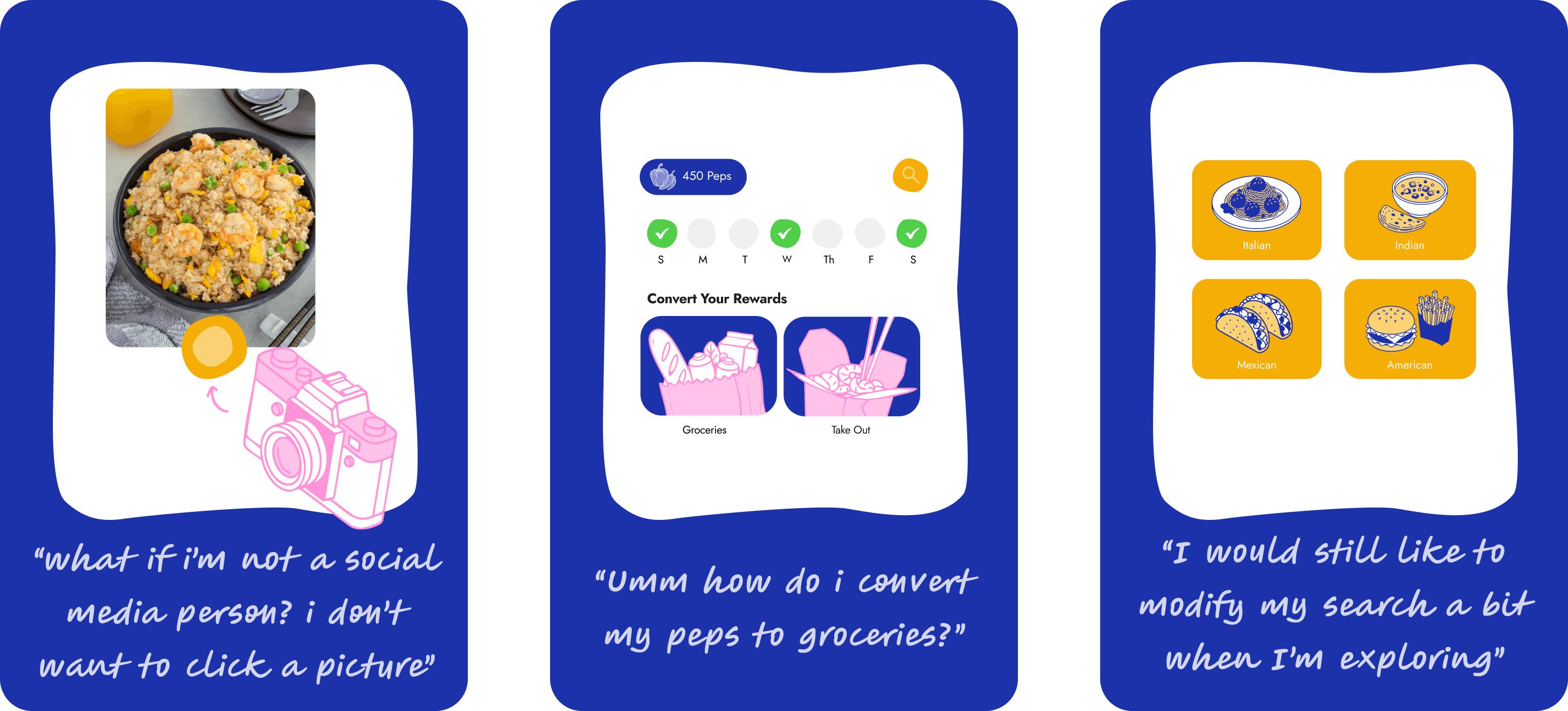
Some users were hesitant to upload photos of their meals to the community feed and wanted clarity on whether they could still earn Peps without sharing images.
Users expressed confusion around how Peps could be converted into grocery or takeout rewards.
Despite having preferences set during onboarding, some users still wanted the ability to search and filter based on specific requirements.
And made necessary changes
We incorporated this feedback by adding clearer context through supporting screens and making targeted refinements to improve clarity and flexibility across the experience.
IF WE HAD MORE TIME
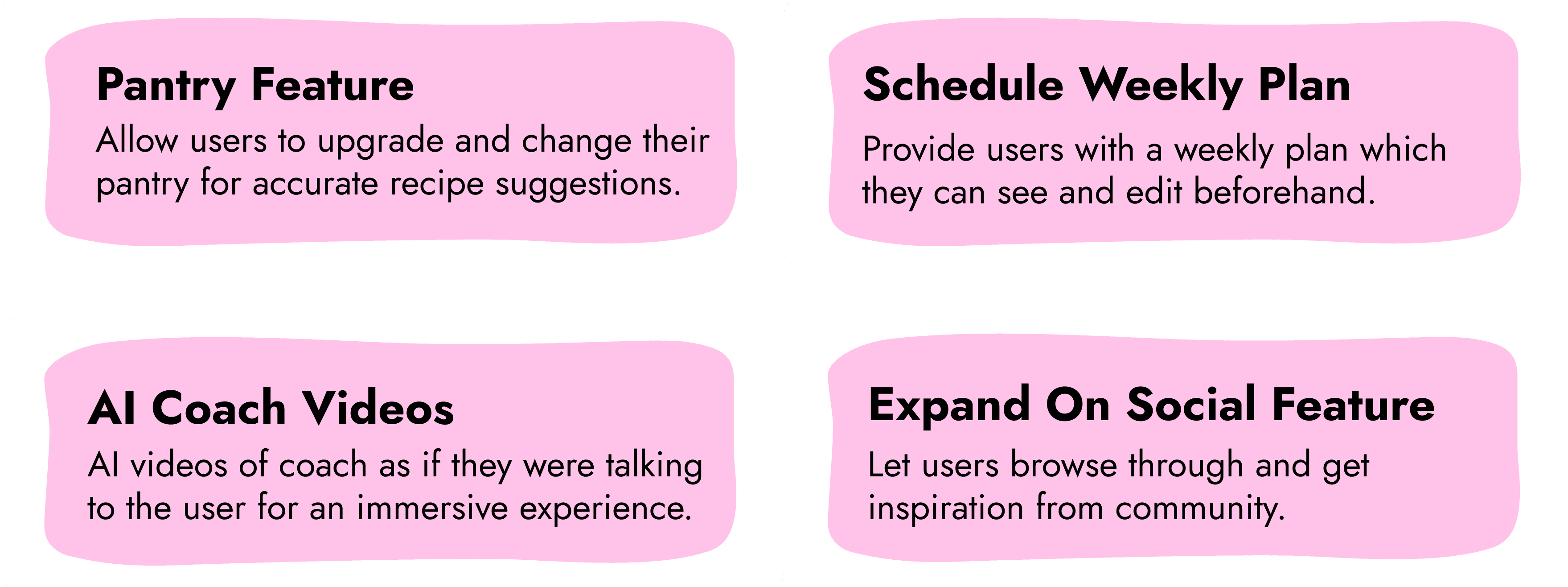
For a more holistic experience that meet all the pain-points there are few other things that we owuld have loved to add on to the existing flows
To taking a pause and truly enjoying the process of cooking!
You can reach out to me at areen.skd@gmail.com
Copyright © 2025 Areen Deshmukh | Last updated Dec 2025